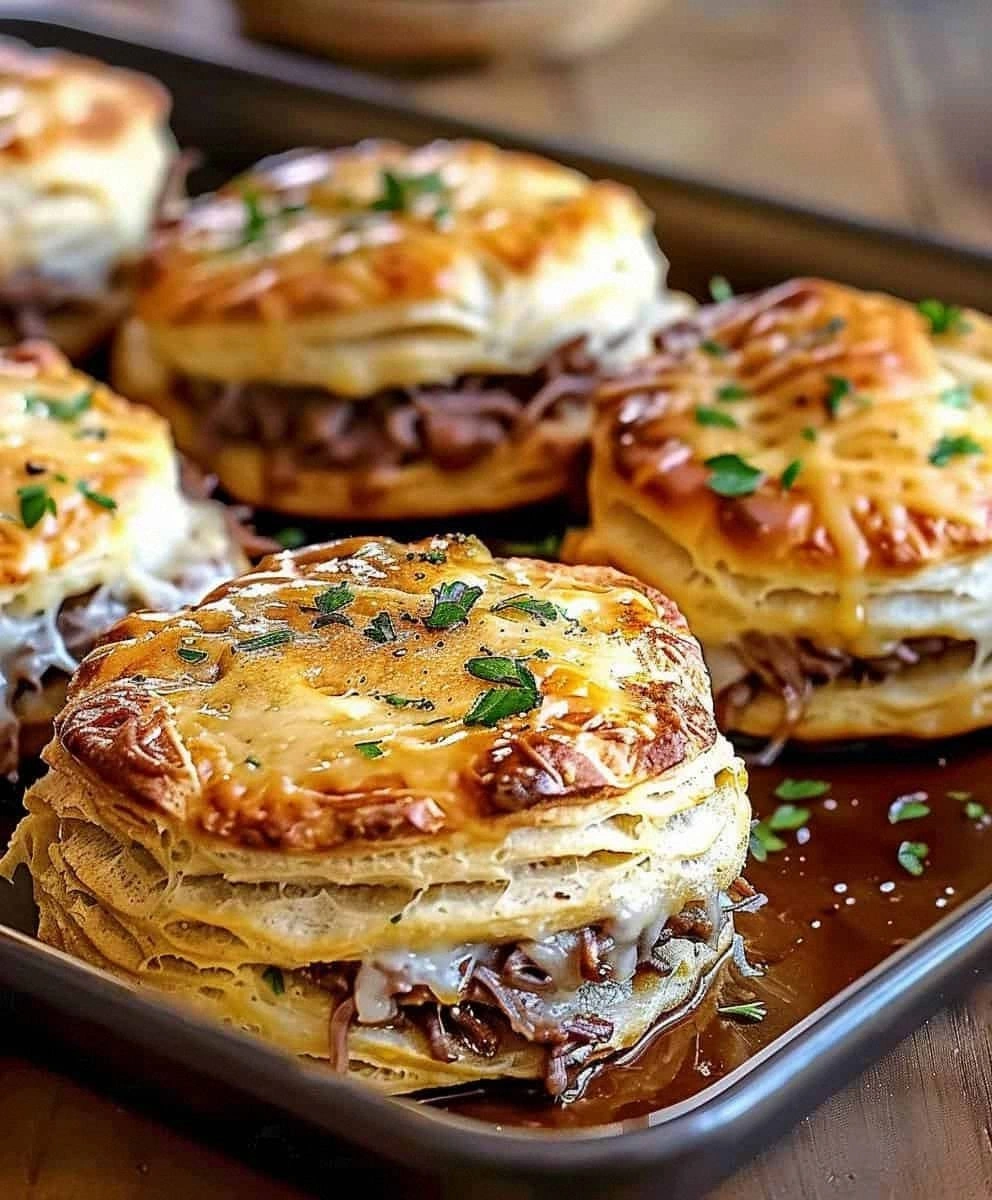
Picture this: it's 11:47 PM on a Tuesday, you're standing in your kitchen wearing mismatched socks and a hoodie with a questionable marinara stain, and you're hit with a craving so specific it could be patented. You want the buttery, flaky comfort of homemade biscuits, but you also want the savory, beefy satisfaction of a French dip sandwich. You want to dunk something into rich, glossy au jus and watch the golden edges soak up all that meaty magic. You've tried the standard recipes before — those sad, doughy imposters that taste like someone waved a beef bouillon cube over a can of refrigerated biscuits and called it a day. Not tonight. Tonight you're about to discover the version that'll ruin every other attempt for you forever.
Let me be brutally honest — I didn't set out to create the ultimate hybrid. I was actually trying to make a respectable dinner for my in-laws, but halfway through I realized I'd forgotten to buy hoagie rolls and my roast beef was looking suspiciously dry. In a moment of what I can only describe as culinary desperation meets stroke of genius, I thought: what if I stuffed all that beefy goodness inside buttery biscuit dough? The result was so outrageously good that I burned my tongue twice because I couldn't wait for them to cool. My father-in-law, a man who once described my cooking as "fine, I guess," ate four before dinner officially started.
This isn't just another recipe — this is the one that'll make you the legend of your friend group. These baked French dip biscuits have everything: the shatteringly crisp bottoms that give way to tender, cheese-laced layers, the way the roast beef stays juicy because it's protected by its buttery blanket, and that moment when you dip a steaming hot biscuit into the glossy au jus and watch it absorb just enough to make every bite a perfect balance of flaky and saucy. I dare you to taste this and not go back for seconds.
Most recipes get this completely wrong by treating it like a regular biscuit with some beef thrown in. Here's what actually works: we're creating a self-basting environment where the beef releases its juices into the biscuit as it bakes, while the cheese forms little molten pockets that keep everything impossibly moist. The secret weapon? A quick dip in seasoned beef broth right before baking that creates this incredible two-texture experience — crispy edges that shatter like thin ice, with an interior that stays tender and almost creamy. Picture yourself pulling this out of the oven, the whole kitchen smelling incredible, steam rising as you break open that first biscuit and watch the cheese stretch into golden ribbons. Let me walk you through every single step — by the end, you'll wonder how you ever made it any other way.
What Makes This Version Stand Out
This recipe is hands down the best version you'll ever make at home, and I'm not just saying that because I'm biased (okay, maybe a little). The magic happens when you realize we're not just combining two classics — we're creating something entirely new that captures everything you love about both dishes while fixing all their problems.
- Flavor Explosion: The biscuit dough gets infused with garlic and onion powders during mixing, so every single layer carries that savory depth you usually only get from hours of slow cooking. It's like someone took all the best parts of a French dip and compressed them into concentrated flavor bombs.
- Texture Perfection: Most biscuit sandwiches turn into soggy disasters once you add any moisture. Not these beauties. The quick broth dip creates a protective crust that stays crisp even after dunking, while the interior stays tender and almost creamy from the melting cheese.
- One-Bowl Simplicity: I'll be honest — I ate half the batch before anyone else got to try it because I kept "testing" them. The best part? You don't need any special equipment or techniques. If you can stir and fold, you can make these.
- Unexpected Surprise Factor: When you serve these at your next gathering, watch people's faces. They expect a regular biscuit, then bite into tender roast beef and melty cheddar. It's like a magic trick, but edible.
- Quality Control: Unlike those sad deli sandwiches where the roast beef tastes like it was sliced last week, you control everything here. Fresh beef, real cheese, and no mysterious "seasoning packets" required.
- Make-Ahead Champion: The unbaked biscuits freeze beautifully. Make a double batch on Sunday, freeze half, and you've got instant weeknight dinner magic that'll make your future self incredibly grateful.
Alright, let's break down exactly what goes into this masterpiece.
Inside the Ingredient List
The Flavor Base
Let's start with the foundation — the flour blend that makes these biscuits absolutely irresistible. All-purpose flour gives us the perfect structure, but here's what most recipes miss: we're adding black pepper directly to the dough, not just as a finishing touch. This creates a gentle heat that builds as you eat, making each bite more interesting than the last. The baking powder isn't just for lift — it's your insurance policy against dense, hockey-puck biscuits. Fresh baking powder makes the difference between biscuits that rise like they're on a mission and ones that sit there like sulking teenagers.
Now, about that butter — and yes, we're using a full half cup because we deserve nice things. Cold butter creates steam pockets as it melts in the oven, which translates to layers so flaky you'll want to photograph them for posterity. I cube mine and pop it back in the freezer for ten minutes while I prep everything else. That sizzle when it hits the pan? Absolute perfection.
The Texture Crew
Cheddar cheese isn't just here for flavor (though it delivers on that front too). As it melts, it creates these little cheese lava flows that keep the surrounding biscuit dough moist while forming crispy edges where it touches the pan. Sharp cheddar gives you maximum flavor impact with minimal quantity — we're not trying to make cheese biscuits with beef, we're making beef biscuits enhanced by cheese. There's a difference, and your taste buds will thank you for understanding it.
Buttermilk is the unsung hero here. Its acidity tenderizes the gluten in the flour, giving you biscuits that stay soft even when fully cooked through. Plus, it reacts with the baking powder for extra lift. No buttermilk? Mix 3/4 cup regular milk with a tablespoon of lemon juice and let it sit for five minutes. Crisis averted.
The Unexpected Star
Here comes the controversial part — we're using deli roast beef, but not just any sad, pre-packaged stuff. Hit up the deli counter and ask for the good stuff sliced thick, then chop it yourself. The quality difference between premium roast beef and the bargain bin option is the difference between a memorable meal and a mistake you'll regret for hours. The beef gets folded into the dough in generous chunks, creating meaty pockets that make every bite feel substantial.
The Final Flourish
The au jus isn't an afterthought — it's where the magic happens. Beef broth gets transformed with Worcestershire sauce (that umami bomb that makes everything taste like it cooked for hours), garlic and onion powders for depth, thyme for earthiness, and a whisper of cayenne for warmth. The cayenne is optional, but if you've ever struggled with bland food, you're not alone — and I've got the fix. Just a pinch makes everything taste more like itself without announcing "hey, I'm spicy!"
Fresh parsley at the end isn't just for color (though it does make these look like they came from a restaurant where they charge $14 for three biscuits). It adds a fresh, almost grassy note that cuts through all the richness. Skip it and you'll still have delicious biscuits, but add it and you'll understand why restaurants bother with garnishes.
Everything's prepped? Good. Let's get into the real action.
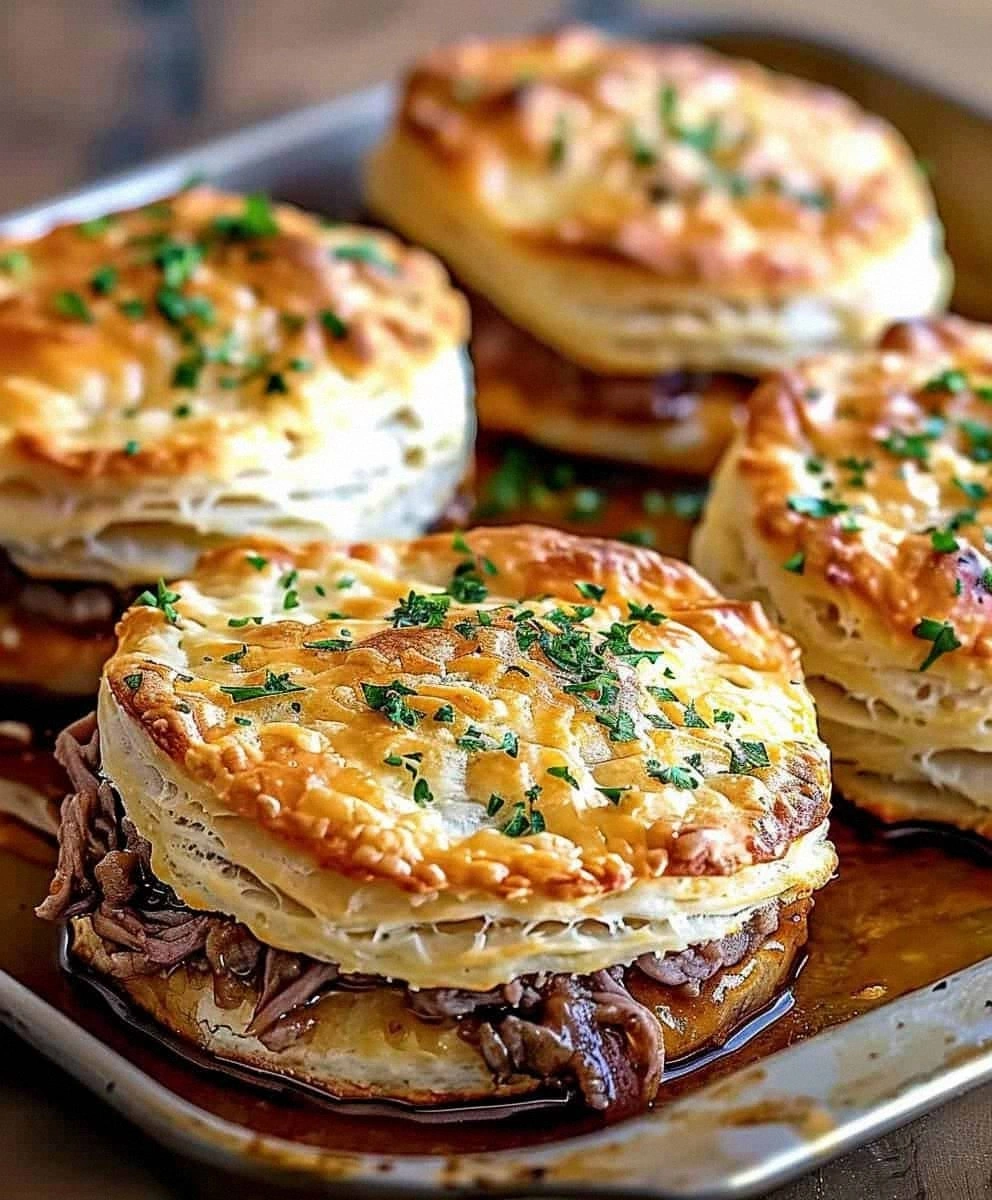
The Method — Step by Step
- Start by preheating your oven to 425°F (220°C) and position a rack in the middle. This temperature is crucial — too low and your biscuits won't get that golden crown, too high and the bottoms will burn before the insides cook through. While the oven heats, line a baking sheet with parchment paper or a silicone mat. I learned the hard way that skipping this step means chiseling off biscuit remnants later, and nobody has time for that kind of cleanup drama.
- In a large bowl, whisk together the flour, baking powder, salt, black pepper, garlic powder, and onion powder. Take a moment to appreciate how the flour looks like fresh snow and the pepper creates these tiny constellations. This is also when you should grate your cold butter if you haven't already — I use the large holes of a box grater and it feels weirdly therapeutic. Toss the butter cubes (or shreds) into the flour mixture and use your fingertips to quickly work it in. You're looking for pieces the size of small peas — some can be larger, some smaller, but resist the urge to overwork it. Those butter chunks are your ticket to flaky city.
- Now for the fun part — add the cheddar cheese and chopped roast beef. Use a fork to distribute everything evenly, but don't go crazy mixing. The beef should be in generous pieces, not shredded into oblivion. Think marble-sized chunks that'll create those satisfying meaty pockets. Okay, ready for the game-changer?
- Pour in the buttermilk and switch to a rubber spatula. Fold the mixture together with as few strokes as possible — think of it like you're tucking the liquid under the flour, not stirring soup. The dough will look shaggy and barely holding together, which is exactly what you want. Overmixing develops gluten and gives you tough biscuits that could double as paperweights. Resist the urge to make it smooth — lumpy and sticky is your friend here.
- Turn the shaggy mess onto a lightly floured surface and pat it into a rough rectangle about 1-inch thick. Fold it in half like a letter, then pat it out again. Repeat this process 3-4 times — this creates layers without overworking the gluten. Think of it as laminating with air instead of butter. Your final rectangle should be about 3/4-inch thick. Use a sharp biscuit cutter or the rim of a glass to cut out rounds, pressing straight down without twisting. Twisting seals the edges and prevents proper rising, which is biscuit blasphemy.
- Place the biscuits on your prepared sheet so they're just touching — this helps them rise higher by supporting each other. Gather the scraps, pat them together gently, and cut more biscuits. They won't be as pretty as the first batch, but they'll taste identical and wasting dough is a culinary crime. You should get 8-10 biscuits depending on your cutter size. Now, here's where we separate the amateurs from the pros.
- In a small saucepan, combine the beef broth, Worcestershire sauce, thyme, and cayenne. Bring it to a simmer over medium heat and let it reduce slightly while the biscuits rest. This next part? Pure magic. Using a pastry brush, gently paint the tops of each biscuit with the hot broth mixture. Don't drown them — you're creating a glossy finish that'll bake into a beautiful mahogany color. The broth seeps into the top layers, seasoning them and creating this incredible two-texture experience.
- Slide the tray into your hot oven and bake for 15-18 minutes. Don't walk away from the stove here — the transformation happens fast. Around minute 12, you'll smell butter and beef and something magical happening. The biscuits should be golden brown on top and sound hollow when you tap their bottoms. If they're getting too dark too quickly, tent loosely with foil for the last few minutes. While they bake, keep your broth warm on the lowest heat — we're not done with it yet.
- Remove the biscuits and immediately brush them with any remaining broth. This final step adds shine and ensures every bite carries that French dip essence. Let them cool for exactly 5 minutes — any longer and you'll lose that contrast between crispy exterior and steamy interior. Serve them warm with the remaining broth in little ramekins for dipping. The first dunk is transformative — the biscuit absorbs just enough to become custardy inside while staying crisp outside.
That's it — you did it. But hold on, I've got a few more tricks that'll take this to another level...
Insider Tricks for Flawless Results
The Temperature Rule Nobody Follows
Here's the thing about biscuit temperature — it's not just about cold butter (though that's crucial). Your ingredients, your kitchen, and even your hands should be cool. If it's summer and your kitchen feels like a sauna, chill your flour in the freezer for 20 minutes before starting. Warm flour makes warm dough, and warm dough makes sad, flat biscuits. I learned this the hard way during a July heatwave when my biscuits spread like cookies and tasted like buttery hockey pucks.
But here's the counterintuitive part — while everything going into the biscuits should be cold, your oven needs to be screaming hot. That immediate blast of heat creates steam from the butter and buttermilk, giving you lift before the structure sets. If your oven runs cool (and many home ovens do), bump the temperature up to 450°F. Yes, really. A friend tried skipping this step once — let's just say it didn't end well.
Why Your Nose Knows Best
Forget timers — your nose is the most reliable tool in your kitchen. These biscuits go through distinct aromatic phases as they bake. First, you'll smell butter and flour (around minute 8), then beef and cheese (minute 12), and finally this incredible toasty, nutty aroma that means they're done. If you only go by the timer, you might pull them out too early when they're still pale and doughy inside. Trust your senses — they've been honed by thousands of years of human cooking evolution.
That sizzle when you brush on the hot broth? That's the sound of flavor development happening in real-time. The hot liquid hits the cooler biscuit surface, creating tiny steam explosions that help form that glossy, slightly chewy top layer. It's the difference between homemade and restaurant-quality — that attention to detail that makes people wonder what your secret is.
The 5-Minute Rest That Changes Everything
I know, I know — hot biscuits are irresistible. But here's why you absolutely must wait: during baking, the steam inside creates pressure that keeps the structure inflated. If you break them open immediately, that steam escapes and your fluffy layers collapse into dense disappointment. Five minutes lets the steam redistribute and the structure set, so when you do tear into them (and you should tear, not cut), you get those beautiful flaky layers instead of a doughy mess.
During this rest, the cheese that's melted into every crevice firms up just enough to stay in place instead of oozing out like lava. The beef juices that have been bubbling away settle back into the meat, so every bite is perfectly balanced. Use this time to pour yourself a drink and prepare for the inevitable moment when everyone at the table falls silent because they're too busy eating to talk.
Creative Twists and Variations
This recipe is a playground. Here are some of my favorite ways to switch things up:
The Italian Job
Swap the cheddar for provolone, add a teaspoon of Italian seasoning to the dough, and use thinly sliced roast beef rubbed with garlic and oregano. Serve with an au jus spiked with a splash of red wine and a bay leaf simmered in for 10 minutes. The result tastes like someone turned your favorite Italian beef sandwich into portable form. If you've ever struggled with dry Italian beef, you're not alone — and I've got the fix. The cheese keeps everything moist while the herbs transport you straight to Chicago.
The Breakfast Betrayal
Replace half the roast beef with crispy bacon, use pepper jack cheese instead of cheddar, and add a teaspoon of maple syrup to the au jus. Serve these at brunch and watch people lose their minds over the sweet-savory combination. The maple doesn't make it sweet — it just adds this mysterious depth that has everyone asking for your secret ingredient. A friend tried this variation and now refuses to make regular biscuits ever again.
The French Onion Dream
Caramelize a large onion until it's jammy and golden, chop it roughly, and fold it into the dough with the beef. Use Gruyère instead of cheddar and add a splash of sherry to the au jus. These taste like someone took the best parts of French onion soup and turned them into finger food. The caramelized onions melt into the biscuit, creating these sweet-savory pockets that balance perfectly with the rich beef.
The Spicy Southern Belle
Add 1/2 teaspoon cayenne to the dough (not just the optional amount), use pimento cheese instead of regular cheddar, and include chopped pickled jalapeños. The au jus gets a splash of hot sauce and a pinch of brown sugar. These have heat, but it's the kind that builds slowly and makes you reach for another biscuit to cool down, which just starts the cycle again. They're addictive in the best possible way.
The Mushroom Makeover
Sauté diced mushrooms until they're deeply browned and all moisture has evaporated, then fold them in with the beef. Use Swiss cheese and add a teaspoon of soy sauce to the au jus for extra umami. The mushrooms add this meaty, earthy quality that makes these vegetarian-friendly (if you skip the beef) while still feeling substantial. Even dedicated carnivores devour these without complaint.
The Mini Party Version
Instead of cutting full-size biscuits, pat the dough into a rectangle and cut into 1-inch squares. Bake for 10-12 minutes until golden. These become the ultimate party appetizer — people can pop them whole, and they stay crisp longer than their full-sized cousins. Serve them in a basket lined with a checkered napkin and watch them disappear faster than gossip at a family reunion.
Storing and Bringing It Back to Life
Fridge Storage
Completely cooled biscuits keep beautifully in an airtight container in the fridge for up to 4 days. Line the container with paper towels to absorb excess moisture, and place another paper towel on top before sealing. This prevents condensation from making your biscuits soggy, which is basically a crime against baked goods. The au jus keeps separately in a sealed jar for up to a week — just reheat gently before serving.
Here's what most people get wrong: they refrigerate the biscuits while they're still warm. This creates steam in the container, which leads to soggy, sad biscuits that taste like refrigerator. Let them cool completely on a wire rack first. If you're in a rush, you can cool them in the freezer for 15 minutes, but don't skip this step unless you enjoy disappointment.
Freezer Friendly
These freeze like champions. Arrange cooled biscuits on a baking sheet and freeze until solid, then transfer to a freezer bag with parchment paper between layers. They'll keep for up to 2 months without losing quality. The au jus also freezes beautifully in ice cube trays — pop out a few cubes and reheat for single servings. This is meal prep that actually works, not those sad containers of wilted salad that haunt the back of your freezer.
To reheat from frozen, wrap biscuits in foil and warm in a 350°F oven for 15-20 minutes. Add a tiny splash of water before reheating — it steams back to perfection and keeps them from drying out. Microwaving works in a pinch, but you'll lose that crispy exterior. If you must microwave, wrap in a damp paper towel and heat for 30-45 seconds, then finish in a hot dry pan for 2 minutes to crisp the bottoms.
Best Reheating Method
The oven method reigns supreme: 350°F for 8-10 minutes until warmed through. But here's the pro move — split them in half first and place them cut-side down on a hot skillet for 2 minutes before serving. This creates new crispy surfaces and makes them taste almost as good as fresh. The cut sides get golden and crunchy while the exteriors stay soft. It's like getting the best of both worlds in every bite.
For the ultimate revival, reheat them in the au jus itself. Warm the broth in a wide pan, add the split biscuits cut-side down, cover, and simmer for 2-3 minutes. They absorb just enough broth to become custardy inside while the bottoms crisp against the pan. It's like French toast meets French dip, and it's absolutely worth the extra pan to wash.