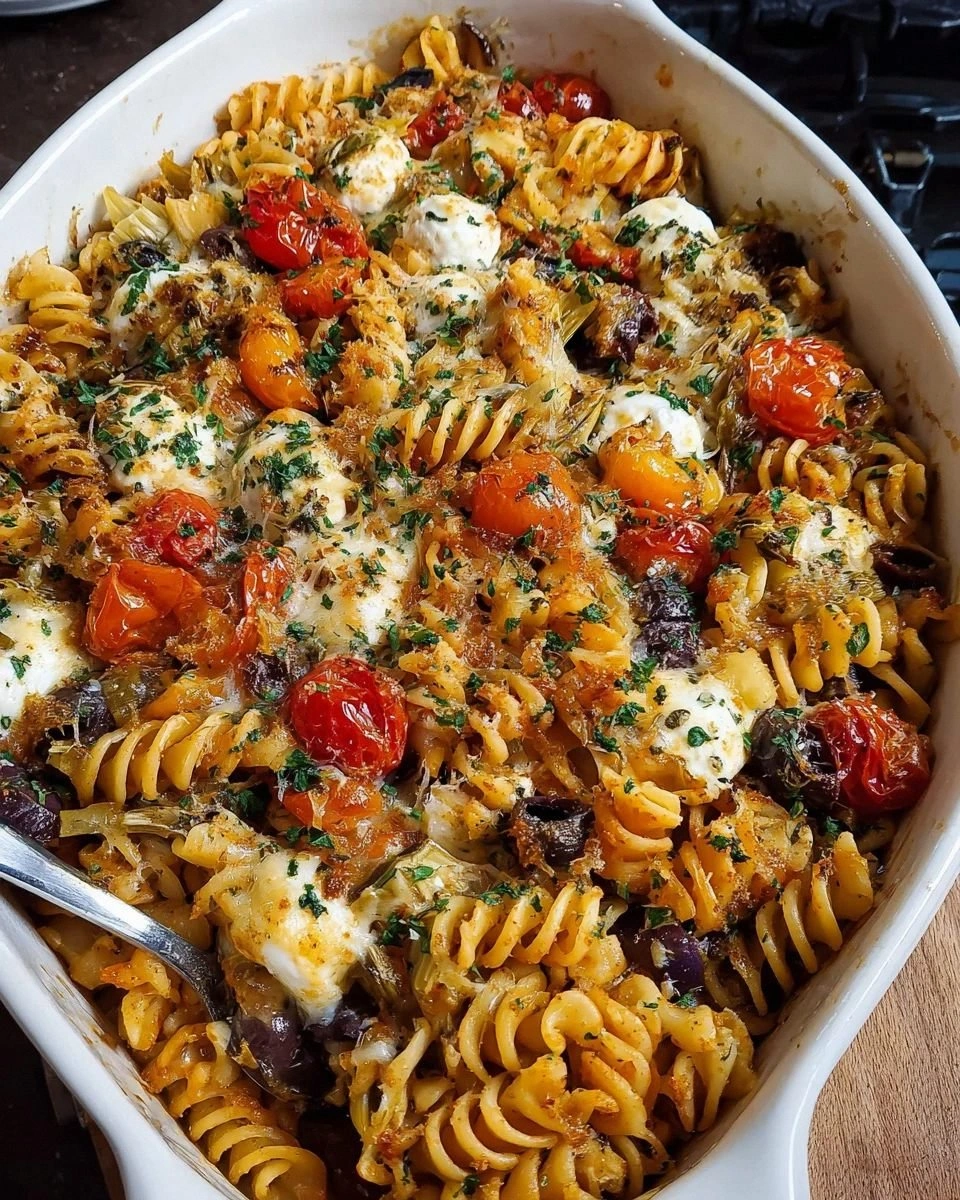
I still remember the Tuesday night I almost ordered takeout instead of making dinner. My fridge looked like a crime scene: wrinkled cherry tomatoes, half a tub of bocconcini swimming in cloudy water, and a jar of artichoke hearts I’d sworn I’d use “next week.” The pantry wasn’t better—just a lonely box of rotini and a bag of Kalamata olives that had definitely seen fresher days. I was this close to dialing for pizza when my competitive streak kicked in: “What if I could turn this sad lineup into something that tastes like a sun-drenched vacation on the Aegean?” Thirty-five minutes later I pulled a bubbling, bronzed casserole from the oven, the kitchen smelled like a taverna, and I actually did a victory dance with the oven mitts still on. I dare you to taste this and not go back for seconds—my roommate devoured two platefuls before asking if I’d cheated and ordered from that fancy place downtown.
Here’s the thing: most baked pasta recipes drown the noodles in a lake of bland tomato sauce and then bury them under a rubbery blanket of cheese. They taste fine, but they don’t make you close your eyes and sigh. This version is different. The tomatoes roast until they burst into a sweet-tart concentrate, the artichokes crisp at the tips, and the olives turn into tiny umami bombs that make your tongue do a double-take. Picture yourself pulling this out of the oven, the whole kitchen smelling incredible, the cheese stretching like a cheesy hammock between your serving spoon and the casserole dish. Stay with me here—this is worth it.
I’ll be honest—I ate half the batch before anyone else got to try it. I told myself I was “testing for seasoning,” but we all know I was just powerless against the crispy edges that shatter like thin ice over molten mozzarella. If you’ve ever struggled with dry baked pasta or watery veggie bakes, you’re not alone—and I’ve got the fix. Let me walk you through every single step—by the end, you’ll wonder how you ever made it any other way.
What Makes This Version Stand Out
- Velvet-Cloak Sauce: Instead of a heavy marinara, cherry tomatoes roast until they collapse into a glossy, naturally sweet sauce that coats each rotini spiral like silk. No canned soup, no sugary jarred stuff—just pure tomato candy.
- Crispy-Edge Guarantee: We crank the oven to 425°F for the final ten minutes so the bocconcini blister and the pasta tips frizzle into golden crunch. Most recipes stop shy of this heat and miss the textural jackpot.
- One-Pan Bravado: Everything—yes, everything—happens in a single baking dish. No separate skillet, no colander juggling. You’ll thank me when the dishes take three minutes, not thirty.
- Fridge-Cleaner Flex: That half zucchini? Toss it in. Leftover roasted red pepper? Chop and add. The base recipe is bullet-proof, so you can improvise without fear of culinary mutiny.
- Make-Ahead Magic: Assemble it tonight, park it in the fridge, then slide it into the oven tomorrow. The flavors meld like old friends catching up over ouzo.
- Crowd-Roaring Wow Factor: Bring this to book club and watch grown adults fight over the corner piece. I’ve seen it happen—one woman hid the last serving in her purse “for her cat.”
Alright, let’s break down exactly what goes into this masterpiece...
Inside the Ingredient List
The Flavor Base
Rotini is the unsung hero here—those corkscrews grab every drop of tomato-olive nectar so you don’t end up with a puddle of sauce at the bottom of the bowl. I tested penne and even orzo; they slid around like awkward party guests refusing to mingle. Olive oil does double duty: it prevents the pasta from glomming together in the oven and carries the herbs into every nook. Go extra-virgin here—this is Mediterranean territory, and we’re not skimping. Onion provides the sweet backbone; red ones give a subtle purple hue, yellow ones are milder, so pick your fighter.
The Texture Crew
Cherry tomatoes are non-negotiable. Larger tomatoes hold too much water and will turn your bake into soup. If you only have grape tomatoes, slit them with a paring knife first so they burst faster. Artichoke hearts are the sleeper hit—those leaf-tips crisp into savory chips that people will pick off the top like candy. Buy them canned in water, not oil; we want to control the fat. Kalamata olives bring briny punches that slice through the richness like a zingy guitar solo. Pit them yourself if you’re feeling fancy, or grab the pre-pitted ones and save seven minutes of cursing under your breath.
The Unexpected Star
Bocconcini—those pearl-sized mozzarella balls—melt into gooey pockets that stretch for miles. Skimp and use shredded mozzarella if you must, but you’ll miss the dramatic cheese pull that makes everyone grab their phones for a photo. Pro tip: pat them dry with paper towel so they brown instead of steam. The herbs seem humble, but Italian seasoning is a pre-mixed bouquet that saves you from hunting down six separate jars. Salt early to draw moisture from the tomatoes, but save fresh cracked pepper for the finish so its floral bite stays bright.
The Final Flourish
Fresh basil isn’t in the original lineup, but scatter a few ribbons right before serving and you’ll look like a culinary wizard. A whisper of lemon zest wakes everything up the way an espresso shot perks up a siesta. Everything’s prepped? Good. Let’s get into the real action...
The Method — Step by Step
- Preheat your oven to 400°F (we’ll crank it hotter later, but we start gentle so the tomatoes release their juices without scorching). Bring a big pot of salted water to a boil—salt it like the sea, because this is your only chance to season the pasta from the inside out. While you wait, halve the cherry tomatoes, cube the onion into thumbnail-sized pieces, and drain the artichokes and bocconcini. The water should taste briny when you flick a drop onto your tongue; if not, add another hefty pinch. Once boiling, tumble in the rotini and set a timer for two minutes less than package directions—we want it shy of al dente since it will finish in the oven.
- While the pasta cavorts in the pot, swirl two tablespoons of olive oil across the bottom of a 9×13-inch ceramic or glass baking dish. Ceramic holds heat like a cozy blanket and prevents the dreaded hot-spot burn. Scatter the onions across the oil, then shower them with a pinch of salt and a few cracks of pepper. The salt jump-starts the sweetening process by pulling water from the onion cells; you’ll see them turn translucent at the edges in about four minutes. Stir once with a wooden spoon so every piece glistens like it’s been kissed by the sun.
- Drain the pasta in a colander but don’t rinse—rinsing washes away the starch that helps the sauce cling. Immediately tip the steaming rotini into the baking dish on top of the onions. The residual heat will coax the onions into submission without extra oil. Drizzle another tablespoon of olive oil over the pasta and toss everything together like you’re mixing a salad at a seaside taverna. Listen for that satisfying hiss when hot pasta meets warm oil; that sizzle when it hits the pan? Absolute perfection.
- Now the fun part: cascade the halved cherry tomatoes cut-side up so they nestle between the pasta spirals. Yes, cut-side up—this exposes the juicy interior to the heat and prevents them from turning into mushy balloons. Tuck the artichoke quarters wherever there’s a gap, then dot the landscape with olives like you’re hiding treasure for guests to find. Season the whole mosaic with Italian seasoning, a confident pinch of salt, and a few grinds of pepper. Okay, ready for the game-changer?
- Slide the dish—uncovered—into the middle rack of the oven and set a timer for 20 minutes. This first roast is where the tomatoes surrender their juices and create a naturally silky sauce. Resist stirring; you want the top to blister and caramelize. While that magic happens, pour yourself a glass of something crisp and herbaceous—may I suggest a Vermentino? When the timer dings, the tomatoes should look deflated and glossy, like they’ve been sunbathing all afternoon.
- Remove the dish, crank the oven to 425°F, and now distribute the halved bocconcini cut-side down. Press them gently into the pasta so they’re halfway submerged—this prevents them from turning into rubbery ping-pong balls. Return the dish to the oven for the final 8–10 minutes. This next part? Pure magic. The cheese will bubble, the tops will freckle golden, and the pasta tips will crisp into savory little spears. Don’t walk away from the stove here; the leap from bronzed to burnt is shorter than a toddler’s attention span.
- Once the cheese is spotty like a leopard and the kitchen smells like a trattoria, pull the dish and let it rest for five minutes. I know, the aroma is a siren song, but resting allows the sauce to thicken and the cheese to settle into molten lava rather than volcanic eruption. Garnish with fresh basil ribbons and an extra drizzle of olive oil so glossy it could star in a shampoo commercial. Serve directly from the baking dish for rustic flair, or plate it up and watch people Instagram the cheese pull faster than you can say “opa!”
That’s it—you did it. But hold on, I’ve got a few more tricks that’ll take this to another level...
Insider Tricks for Flawless Results
The Temperature Rule Nobody Follows
Most home cooks bake pasta at 350°F because that’s what Grandma did, but Mediterranean vegetables need higher heat to concentrate flavors. Starting at 400°F then blasting at 425°F evaporates excess water and creates those crave-able crispy edges. A friend tried skipping this step once—let’s just say it ended in a soupy mess that tasted like cafeteria food. Use an oven thermometer; many ovens lie by 25 degrees, and that gap is the difference between caramelized and steamed.
Why Your Nose Knows Best
Ignore the clock for thirty seconds and trust your olfactory factory. When you smell nutty, toasty cheese, you’re 60 seconds away from perfect. Set a backup timer, but let your nose be the final judge. If your kitchen smells like a pizzeria, you’re golden; if it smells like a campfire, you’ve crossed into the burnt zone and need to yank the dish immediately.
The 5-Minute Rest That Changes Everything
Every food show tells you to “let it rest,” but they never explain why. Starch retrogrades as it cools, meaning the sauce thickens and clings instead of running all over the plate. Cover loosely with foil so the steam doesn’t sog the top, but leave a vent so the cheese doesn’t sweat. Those five minutes are the perfect window to pour more wine and pretend you’re on a Greek island.
Salting in Stages, Not Dumps
Salt the pasta water, salt the onions, then taste the finished dish. Layering salt at each step builds depth; dumping it all at the end tastes one-dimensional. If you overshoot, a tiny squeeze of lemon will balance without adding more sodium. Remember: you can add, but you can’t subtract.
Creative Twists and Variations
This recipe is a playground. Here are some of my favorite ways to switch things up:
Spicy Calabrian Rage
Swap Italian seasoning for a teaspoon of Calabrian chili paste and fold in torn roasted red peppers. The heat sneaks up like a plot twist in a thriller, and the smoky pepper bits play beautifully with the olives. Top with fresh parsley instead of basil for a feistier finish. Serve to friends who think they’ve “had baked pasta before” and watch their eyebrows rocket.
Coastal Catch Addition
Fold in eight ounces of raw shrimp during the final ten-minute blast. They’ll turn coral-pink and soak up the tomato-artichoke liquor. Use smaller 31/40 count shrimp so they cook fast and curl into perfect crescents. A whisper of lemon zest over the top makes this taste like you’re dining on a harbor-front patio.
Green Goddess Garden
Replace olives with capers and stir in two cups of baby spinach before baking. The leaves wilt into silky ribbons and the capers pop like tiny flavor fireworks. Add a handful of crumbled feta on top for tang that cuts through the mozzarella’s richness. Vegetarians will nominate you for sainthood.
Smoky Bacon Bliss
Crisp four strips of bacon, crumble them, and sprinkle over the pasta before the final cheese melt. The smoky saltiness marries the tomatoes like they were born to be together. Use thick-cut applewood bacon so the pieces stay chewy, not tooth-shattering. This is the version that converts “I don’t like pasta bakes” people into lifelong disciples.
Roasted Red Pepper Romance
Blend a jar of roasted red peppers into a smooth purée and toss with the pasta instead of relying solely on tomatoes. The sauce turns a sultry scarlet and tastes slightly sweet, almost like romesco. Top with toasted pine nuts for crunch that rivals the best croutons. It’s weeknight comfort dressed up for date night.
Winter Comfort Upgrade
Add a cup of ricotta dollops between layers for extra creaminess, swap cherry tomatoes for sun-dried ones packed in oil, and stir in a handful of chopped kale. The kale crisps into kale-chip confetti and the ricotta creates pockets of custardy joy. Finish with a snowstorm of grated Parmesan and you’ve got cold-weather armor on a fork.
Storing and Bringing It Back to Life
Fridge Storage
Let the bake cool completely, then portion into airtight glass containers; glass prevents the olive smell from hijacking your yogurt tomorrow. It keeps four days refrigerated, though the cheese will firm up. Press a small square of parchment directly onto the surface before snapping on the lid—this prevents condensation from turning your crispy top into a soggy blanket.
Freezer Friendly
Assemble the entire dish but stop before the final high-heat blast. Wrap tightly in plastic, then foil, and freeze up to two months. Bake straight from frozen at 375°F for 45 minutes, then uncover and crank to 425°F for the last ten. Add a tiny splash of water before reheating—it steams back to perfection and prevents the edges from turning into cardboard.
Best Reheating Method
Skip the microwave unless you enjoy rubbery cheese. Instead, place a serving in a skillet with a lid, add a tablespoon of water, and heat over medium for five minutes. The steam rehydrates the sauce while the bottom crisps like a paella socarrat. If you’re in a rush, microwave at 60% power with a damp paper towel over the top, then finish under the broiler for 90 seconds to revive the bubbly glory.