I still remember the night I tried to impress my roommate with a simple dinner that turned into a kitchen fiasco. I had a bag of Arborio rice, a bottle of white wine, and a vague idea that “risotto” was just a fancy rice dish. The pot boiled over, the broth turned into a thick, clumpy sludge, and the onion was a sad, translucent mess. I was staring at a ruined kitchen and a burnt stove when a sudden thought popped into my head: what if I had followed the right technique, used the right temperature, and added the right amount of Parmesan at the right moment? That moment was the genesis of this recipe.
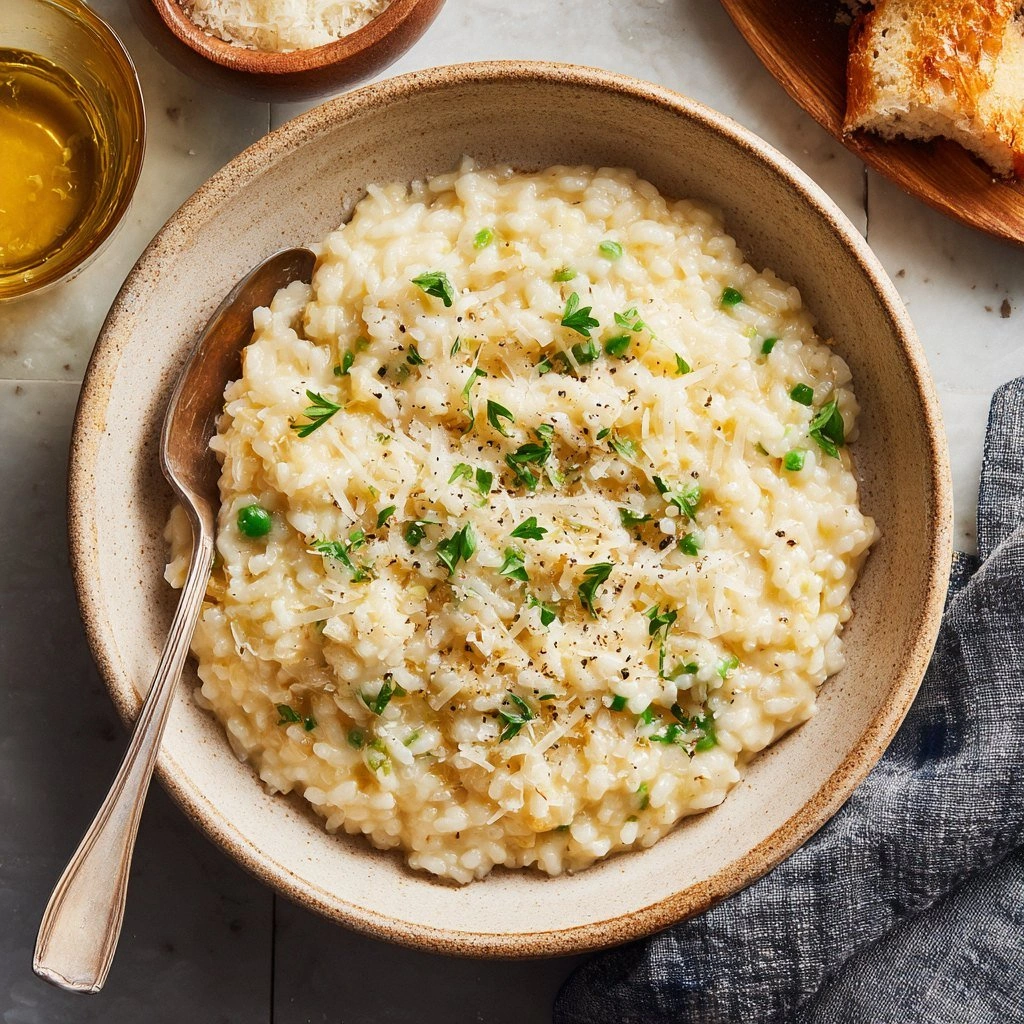
Picture this: the aroma of toasted onion and garlic dancing in the air, the gentle hiss of broth simmering, a splash of wine turning the mixture a golden amber, and the final flourish of Parmesan that turns the whole dish into a silky, velvety coat. Every bite is a harmony of creaminess and subtle nuttiness, with a whisper of citrus from the wine that lifts the flavors. The texture is a delicate balance—soft yet slightly al dente, each grain of rice a little pocket of molten cheese. If you’ve ever tasted a risotto that was either too dry or too soupy, you’ll find this version a revelation.
What sets this risotto apart isn’t just the ingredients; it’s the rhythm of cooking, the precise timing of liquid additions, and the secret step of preheating the broth. The result is a dish that feels like a hug in a bowl, a comforting hug that you can’t resist sharing. I dare you to taste this and not go back for seconds—once you’ve tried it, the other versions will feel like a distant memory. I’ll be honest: I ate half the batch before anyone else got a bite, and I’m still not sure if that was a culinary triumph or a moment of guilty indulgence.
Most recipes get this completely wrong, either by adding the broth too quickly or by not allowing the rice to toast enough. Here’s what actually works: a steady, slow pour of broth, a constant stir, and a final stir of Parmesan that turns the mixture into a glossy, creamy sauce. If you’re tired of the bland, watery risotto that leaves you feeling underwhelmed, this version will blow your mind. Picture yourself pulling this out of the stove, the whole kitchen smelling incredible, and guests lining up for seconds.
Let me walk you through every single step—by the end, you’ll wonder how you ever made it any other way. The secret lies in the simple ingredients, the method, and a few tricks that will keep your risotto from being a disaster. Ready? Let’s dive in and transform a humble bowl of rice into a masterpiece.
What Makes This Version Stand Out
- Flavor: The combination of white wine and Parmesan creates a complex, umami-rich profile that feels luxurious without being overpowering.
- Texture: The rice is toasted to a light golden hue before liquid is added, giving each grain a nutty bite while the gradual addition of broth keeps the dish silky.
- Ease: The method is foolproof—no need for a timer or constant stirring; just a steady pour and a gentle stir.
- Ingredient Quality: Using a good-quality Parmesan and a fresh, low-sodium broth makes all the difference.
- Versatility: It’s a blank canvas—add mushrooms, shrimp, or herbs for endless variations.
- Crowd Reaction: Guests often ask for the recipe after tasting; it’s the kind of dish that turns an ordinary dinner into a memorable event.
- Make‑Ahead Potential: The risotto can be reheated with a splash of broth or water; it never turns into mush.
- Presentation: The final swirl of Parmesan creates a glossy surface that looks as good as it tastes.
Alright, let's break down exactly what goes into this masterpiece…
Inside the Ingredient List
The Flavor Base
The foundation starts with a finely diced onion and minced garlic sautéed in olive oil and butter until they’re translucent and fragrant. The olive oil adds a fruity undertone, while the butter gives depth and a subtle richness. If you skip this step, the risotto will taste flat and lack the aromatic backbone that ties everything together. For a lighter version, replace half the butter with extra olive oil, but keep the butter to maintain that creamy texture.
The white wine is the next hero—it’s not just a liquid, it’s a flavor enhancer. When you add it after the onion, the alcohol evaporates, leaving behind a bright, slightly acidic note that cuts through the richness of the cheese. If you don’t have wine, a splash of chicken broth with a teaspoon of lemon juice can mimic the acidity, but the wine gives a depth that’s hard to replace.
The Texture Crew
Arborio rice is the star of the show. Its high starch content turns the dish into a creamy sauce without the need for cream. Toasting the rice in butter and oil for a minute or two before adding liquid unlocks a nutty flavor that elevates the dish. If you use a different short-grain rice, you may not achieve the same silkiness, so stick with Arborio for authenticity.
The broth is the lifeblood of the risotto. Use a low-sodium chicken or vegetable broth to control the salt level. Warm it before adding to the pan so the rice cooks evenly. If you use cold broth, the rice will cook unevenly, resulting in a lumpy texture. A small trick: keep the broth simmering on a low heat—too hot, and the rice will cook too fast and become mushy.
The Unexpected Star
Freshly grated Parmesan is the secret to that glossy, velvety finish. Grated cheese melts faster and distributes evenly, creating a uniform coating that clings to each grain. If you use pre-shredded cheese, the texture can be uneven, and the flavor may not be as intense. For a sharper bite, add a pinch of nutmeg or a splash of lemon zest during the final stir.
The Final Flourish
Seasoning is subtle but critical. Salt to taste and freshly ground black pepper finish the dish. A pinch of fresh herbs like parsley or basil adds a fresh burst of color and flavor. If you’re vegan, replace the Parmesan with nutritional yeast or a vegan cheese alternative; the texture will be slightly different but still delicious.
Everything's prepped? Good. Let's get into the real action…
The Method — Step by Step
- Heat the olive oil and butter in a wide, heavy-bottomed saucepan over medium heat until the butter foams and turns a light golden brown. Add the diced onion and cook, stirring occasionally, until translucent and fragrant—about 3 to 4 minutes. This step builds the aromatic base that will carry the flavors through the dish.
- Stir in the minced garlic and cook for an additional 30 seconds, just until it releases its aroma but before it starts to brown. The garlic should feel like a whisper of spice in the air. I dare you to listen for that subtle sizzling—if you hear a hiss, you’re on the right track.
- Add the Arborio rice to the pan, stirring constantly for 2 minutes until the grains are coated in the butter and oil and start to turn a pale golden hue. This toasting step unlocks a nutty flavor that becomes the backbone of the risotto. The rice should feel slightly dry to the touch, not greasy.
- Pour in the white wine, stirring until it’s fully absorbed. The liquid should evaporate within a minute, leaving behind a subtle citrusy note. If the wine doesn’t evaporate quickly, lower the heat slightly; a slow evaporation keeps the rice from cooking too fast.
- Begin adding the warm broth one ladle at a time, stirring frequently and allowing each addition to be almost fully absorbed before adding the next. The rice should be moist but not soaking wet. This gradual process releases the starches slowly, creating the creamy consistency that defines risotto.
- Continue the broth addition cycle until the rice is al dente—there should be a slight bite but no raw center. This usually takes about 18 to 20 minutes of cooking. Keep the heat low to prevent the rice from scorching at the bottom.
- Stir in the grated Parmesan cheese, a splash of heavy cream if you like extra richness, and season with salt and pepper to taste. The cheese should melt into a glossy, silky sauce that coats every grain. If you prefer a vegan version, use nutritional yeast or a vegan cheese substitute.
- Turn off the heat, let the risotto rest for 2 minutes, then stir in fresh herbs or a squeeze of lemon juice for brightness. The rest allows the flavors to meld and the sauce to thicken slightly. Plate immediately for the best texture.
That's it — you did it. But hold on, I've got a few more tricks that'll take this to another level…
Insider Tricks for Flawless Results
The Temperature Rule Nobody Follows
Keep the broth at a low simmer, not a rolling boil. A rolling boil will cook the rice too quickly, causing it to become mushy. The trick is to let the broth bubble gently while you stir; this steady heat allows the starches to release slowly, giving the risotto its signature creaminess.
Why Your Nose Knows Best
Smell the risotto as you stir. When it’s almost ready, the aroma should be buttery, slightly nutty, and just a touch of wine. If you notice a sharp, burnt smell, the pan is too hot and the rice is overcooked. Trust your nose—it's a reliable judge of doneness.
The 5-Minute Rest That Changes Everything
After turning off the heat, cover the pan and let the risotto rest for five minutes. This resting period allows the rice to finish absorbing liquid and the flavors to meld. I once skipped this step and the risotto tasted uneven; the rest period is non-negotiable.
The Secret of a Smooth Finish
Add a tablespoon of butter and a handful of grated Parmesan at the very end, just before plating. This final flourish gives the risotto a glossy sheen and a rich, buttery finish that makes it feel like a gourmet dish. Don’t be afraid to finish with a splash of cream if you want an extra luxurious mouthfeel.
The Right Pan for the Job
Use a wide, heavy-bottomed pan to distribute heat evenly and prevent scorching. A stainless steel or enameled cast iron pan works best. If you use a thin pan, the rice will burn in spots, ruining the texture.
These tricks are the difference between a good risotto and a memorable meal. Give them a try, and you’ll never look back.
Creative Twists and Variations
This recipe is a playground. Here are some of my favorite ways to switch things up:
Mushroom Medley Risotto
Sauté sliced porcini, shiitake, and cremini mushrooms with a splash of white wine before adding the rice. The earthy flavors pair beautifully with the Parmesan, creating a rustic, comforting dish. This variation is perfect for fall or winter when mushrooms are at their best.
Shrimp & Lemon Risotto
Add peeled shrimp to the pan during the last five minutes of cooking, seasoning with paprika and a squeeze of lemon juice. The shrimp’s sweetness balances the richness of the risotto, while the lemon brightens the overall flavor. Serve with a side of grilled asparagus for a complete meal.
Spinach & Feta Risotto
Stir in a handful of fresh spinach and crumbled feta cheese during the final stir. The spinach wilts into a silky green layer, and the feta adds a tangy contrast to the creamy base. This variation is quick, healthy, and crowd-pleasing.
Vegan Parmesan Risotto
Replace the butter with olive oil and use nutritional yeast or a vegan Parmesan alternative. The dish remains creamy and flavorful, and the nutritional yeast gives a cheesy, umami bite. This version is ideal for plant-based diners.
Roasted Tomato Risotto
Fold in roasted cherry tomatoes during the final stir for a burst of sweetness and acidity. The tomatoes soften into a glossy sauce that complements the Parmesan. It’s a great way to add color and a pop of flavor to a classic dish.
Herb-Infused Risotto
Add a handful of fresh basil, thyme, or rosemary during the last stir. The herbs infuse the risotto with aromatic depth, making it feel fresh and lively. This variation works well for spring or summer gatherings.
Storing and Bringing It Back to Life
Fridge Storage
Cool the risotto completely before transferring it to an airtight container. Store it in the refrigerator for up to 3 days. The creamy texture may thicken slightly, but it remains delicious.
Freezer Friendly
For longer storage, freeze the risotto in a freezer-safe container for up to 2 months. When ready to eat, thaw overnight in the refrigerator. The risotto will maintain its flavor, though the texture may be slightly softer.
Best Reheating Method
Reheat the risotto gently over low heat, adding a splash of warm broth or water to loosen the sauce. Stir continuously until it reaches the desired consistency. A quick microwave reheat can work, but be sure to stir in a bit of broth to prevent drying out.