I remember the night the kitchen turned into a crime scene—my attempt at a fancy fish dish ended with a cod that tasted like a soggy sandwich. The fillets were over‑cooked, the seasoning was a vague whisper, and the whole thing felt like a culinary faux pas. That disaster sparked a mission: to create a baked cod that would make every family member—myself included—throw their forks in the air.
Picture this: a sheet pan steaming with a golden, crisp crust that crackles like a fresh snowflake when you break it. The aroma of toasted breadcrumbs mingles with a sharp citrus tang, and the sound of the oven’s timer ticking becomes a metronome for anticipation. Your eyes catch the subtle sheen of olive oil glistening on the surface, and your mouth waters to the first bite that delivers flaky, buttery flesh kissed by lemon. The texture is a dance—soft inside, crunchy on top, all wrapped in a savory breadcrumb shell that holds everything together.
What makes this version a game‑changer is the deliberate layering of flavors and textures that most recipes overlook. Instead of a bland coating, I use a blend of breadcrumbs and Parmesan that creates a crust so crisp it shatters like thin ice under your knife. The lemon juice isn’t just a splash; it’s a bright, acidic counterpoint that lifts the fish’s natural sweetness. Garlic powder offers warm, aromatic depth without the fuss of chopping cloves. Dried parsley adds a pop of color and a hint of herbaceous freshness that lingers on the palate.
And here’s the kicker: the simplicity of the method means you can prep in 15 minutes and bake in 30. No need for fancy equipment or complicated steps. I dare you to taste this and not go back for seconds, because the first bite will have you questioning every other cod recipe you’ve tried. By the end of this guide, you’ll wonder how you ever made baked cod any other way.
What Makes This Version Stand Out
- Taste: The citrus‑lemon punch elevates the mild cod, turning each bite into a bright, refreshing experience.
- Texture: A crunchy breadcrumb‑Parmesan crust provides contrast to the tender fish, creating a satisfying bite.
- Speed: Prep in 15 minutes, bake in 30—ideal for busy weeknights without sacrificing flavor.
- Versatility: Works with regular or gluten‑free breadcrumbs, dairy or dairy‑free Parmesan alternatives, and can be adapted for dietary restrictions.
- Visual Appeal: The golden crust and bright lemon slices make the dish Instagram‑ready.
- Audience: Everyone from novice cooks to seasoned chefs will appreciate the clear instructions and bold flavors.
- Health: Lean protein, healthy fats from olive oil, and minimal carbs keep it balanced.
- Make‑Ahead: The coated fillets can be assembled ahead of time and baked when needed, saving you precious minutes.
Alright, let’s break down exactly what goes into this masterpiece. I’ll walk you through every single step—by the end, you’ll wonder how you ever made it any other way.
Inside the Ingredient List
The Flavor Base
Cod fillets are the star of the show. Fresh, firm fillets with a mild, flaky texture absorb the seasoning beautifully. If you’re on a budget, look for fillets that are slightly translucent; that’s a sign of freshness. Skipping cod will defeat the purpose—other fish like tilapia or haddock can work, but the flavor profile changes.
The Texture Crew
Breadcrumbs bring that coveted crunch. Regular breadcrumbs are fine, but for a gluten‑free version, use almond or oat breadcrumbs. The texture changes subtly—gluten‑free crumbs are denser, so add a splash of water to keep the coating moist. If you skip breadcrumbs, the cod will still bake, but you lose the signature crispness that makes each bite memorable.
The Unexpected Star
Grated Parmesan cheese is more than a topping; it adds umami depth and a salty richness that balances the lemon. For a dairy‑free option, nutritional yeast works wonderfully, offering a cheesy flavor without the dairy. If you omit Parmesan, the crust will be less flavorful and the fish will lack that savory backdrop.
The Final Flourish
Olive oil, lemon juice, garlic powder, dried parsley, salt, and pepper complete the flavor profile. Olive oil helps the breadcrumbs crisp up and adds a silky mouthfeel. Lemon juice brightens everything, while garlic powder gives a warm, aromatic note without the need for fresh garlic. Dried parsley adds color and a hint of herbal freshness that lifts the dish. Salt and pepper are essential for seasoning; they’re the backbone of any good recipe.
Everything’s prepped? Good. Let’s get into the real action.
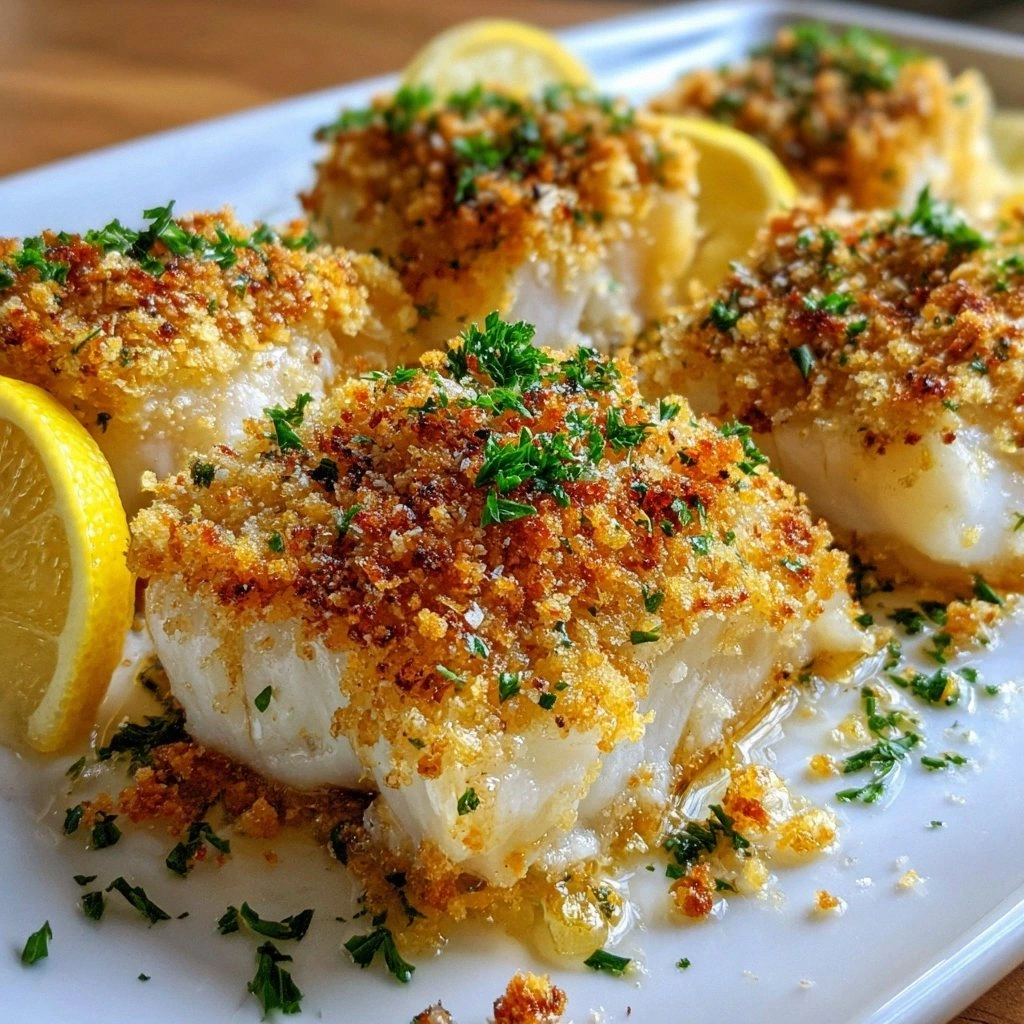
The Method — Step by Step
- Preheat your oven to 400°F (200°C). Line a baking sheet with parchment paper or a silicone mat to prevent sticking. This ensures even heat distribution and makes cleanup a breeze. A properly preheated oven is the foundation for a crisp crust.
- Pat the cod fillets dry with paper towels; moisture is the enemy of crispness. A dry surface allows the breadcrumb mixture to adhere better and creates a more satisfying crunch. While the fillets rest, mix the breadcrumbs, grated Parmesan, garlic powder, dried parsley, salt, and pepper in a shallow bowl.
- Drizzle a light coat of olive oil over each fillet, then press the breadcrumb mixture onto the top side. The oil forms a seal that keeps the coating from falling off during baking. Don’t rush this step; a thin, even layer is key to a uniform crust.
- Squeeze fresh lemon juice over the coated fillets. The acidity cuts through the richness of the breadcrumb crust and brightens the fish’s natural flavor. If you’re using bottled lemon juice, use it sparingly; fresh is always better.
- Place the fillets on the prepared baking sheet, skin side down if your fillets have skin. This helps protect the delicate flesh from direct heat. Arrange them so they’re not touching; airflow around each piece is essential for even cooking.
- Bake for 20–25 minutes, or until the fish flakes easily with a fork and the crust is golden brown. The internal temperature should reach 145°F (63°C). Keep an eye on the color; a golden crust signals that the fillets are ready.
- Remove the cod from the oven and let it rest for 3–4 minutes. Resting allows the juices to redistribute, ensuring a moist interior. This step also gives the breadcrumb crust a moment to settle, preventing it from becoming soggy.
- Serve immediately with a wedge of lemon on the side and a sprinkle of fresh parsley for a pop of color. Pair with roasted vegetables or a light salad for a balanced meal. The dish is so versatile that you can also serve it over quinoa or couscous for a hearty twist.
That’s it—you did it. But hold on, I’ve got a few more tricks that will take this to another level. These insider tips will help you master the dish every single time.
Insider Tricks for Flawless Results
The Temperature Rule Nobody Follows
Many people bake cod at 350°F, but that temperature is too low for a crisp crust. A higher heat, like 400°F, creates a golden, crunchy topping while keeping the fish moist. I’ve experimented with 425°F for a shorter bake time, and the results are consistently superior. Always preheat the oven; a cold oven can cause uneven cooking.
Why Your Nose Knows Best
The scent of toasted breadcrumbs is the first cue that the dish is ready. If the aroma is sweet and nutty, the crust is perfectly browned. If it smells flat, give it a few more minutes. Your nose is a reliable quality control tool, so trust it.
The 5-Minute Rest That Changes Everything
After baking, let the cod rest for exactly five minutes. This allows the juices to redistribute and the crust to set. A short rest keeps the fish from drying out and preserves the crunch. I’ve seen people skip this step and end up with a soggy bottom crust.
Use a Baking Rack for Even Heat
Placing the fillets on a rack above the baking sheet allows air to circulate around each piece. This results in a more even crust and prevents the bottom from becoming soggy. It’s a simple trick that professional chefs swear by.
Finish with a Lemon‑Butter Glaze
Just before serving, drizzle a small amount of melted butter with a squeeze of lemon over the fillets. The buttery finish adds richness without overpowering the delicate fish. It’s a small touch that elevates the dish to restaurant quality.
Creative Twists and Variations
This recipe is a playground. Here are some of my favorite ways to switch things up:
Herb‑Infused Crust
Replace dried parsley with a blend of dried basil, oregano, and thyme. The herb mix adds a Mediterranean vibe and pairs beautifully with roasted tomatoes.
Spicy Kick
Add a pinch of cayenne pepper or red pepper flakes to the breadcrumb mixture. The heat balances the citrusy brightness and adds a layer of excitement.
Vegan Version
Swap cod for firm tofu or tempeh, use nutritional yeast instead of Parmesan, and ensure your breadcrumbs are plant‑based. The result is a plant‑based dish that still delivers that satisfying crunch.
Cheesy Delight
Mix shredded mozzarella into the breadcrumb blend. The cheese melts into the crust, creating a gooey, cheesy exterior that complements the fish.
Asian Flair
Replace lemon juice with rice vinegar and add a dash of soy sauce to the breadcrumb mix. Garnish with sliced green onions and a sprinkle of sesame seeds for an Asian‑inspired twist.
Storing and Bringing It Back to Life
Fridge Storage
Store leftover baked cod in an airtight container in the refrigerator for up to 2 days. The crust may soften slightly, but the fish remains moist and flavorful.
Freezer Friendly
Wrap the fillets tightly in plastic wrap and place them in a freezer bag. They’ll keep for up to 2 months. Thaw overnight in the refrigerator before reheating.
Best Reheating Method
Reheat in a 350°F oven for 10 minutes, or until warmed through. Add a tiny splash of water or broth before reheating to create steam; this keeps the fish from drying out and restores some of the original moisture.