I was standing in my kitchen, staring at a half‑finished bean chili that had somehow turned into a soggy mess, when my roommate dared me to “make something that looks like a rainbow and actually tastes like a party.” I laughed, grabbed the nearest cans, and the idea for this salad was born. The kitchen was a battlefield of clanging pots, the air thick with the smoky scent of cumin, and my mind was buzzing with the question: how do I turn a pile of beans into a dish that could convince even the most skeptical meat‑lover to ask for seconds?
Fast forward a few frantic minutes, a handful of colorful bell peppers diced into perfect cubes, a splash of lime that made the whole room feel like a tropical market, and a drizzle of olive oil that glistened like sunrise on a calm sea. I could hear the faint crackle of the onion soaking in cold water, the soft thud of the beans being tossed into a bowl, and the gentle hum of my fridge door opening and closing as I grabbed fresh cilantro. The scent? A bold, zesty perfume of red wine vinegar mingling with the earthy undertones of black beans, punctuated by the sweet whisper of honey. My hands felt the cool crunch of the peppers, the silky smoothness of the beans, and the slight resistance of the onion’s skin – every texture promising a bite that would be both hearty and refreshing.
What makes this version the ultimate Rainbow Bean Salad? It’s not just the kaleidoscope of colors; it’s the balance of flavors that dance on the palate like a well‑rehearsed choreography. Most recipes get the dressing wrong – they drown the beans in a soggy swamp of oil, or they forget the bright acidity that lifts everything up. Here, I’ve nailed the sweet‑tangy‑spicy trio that makes each forkful sing, and the beans are cooked just enough to stay firm but soft enough to absorb the dressing like a sponge soaking up sunshine.
I’m about to reveal a secret technique that most cooks overlook: a quick toast of the beans in a dry pan before they meet the dressing. This tiny step adds a nutty depth that turns an ordinary salad into a gourmet experience. I dare you to taste this and not go back for seconds – the flavor is addictive, the texture unforgettable, and the colors? Instagram‑ready without any filters.
Let me walk you through every single step — by the end, you’ll wonder how you ever made it any other way.
What Makes This Version Stand Out
- Flavor Explosion: The combination of red wine vinegar, lime juice, and a hint of honey creates a bright, balanced dressing that never overwhelms the beans but lifts them to new heights.
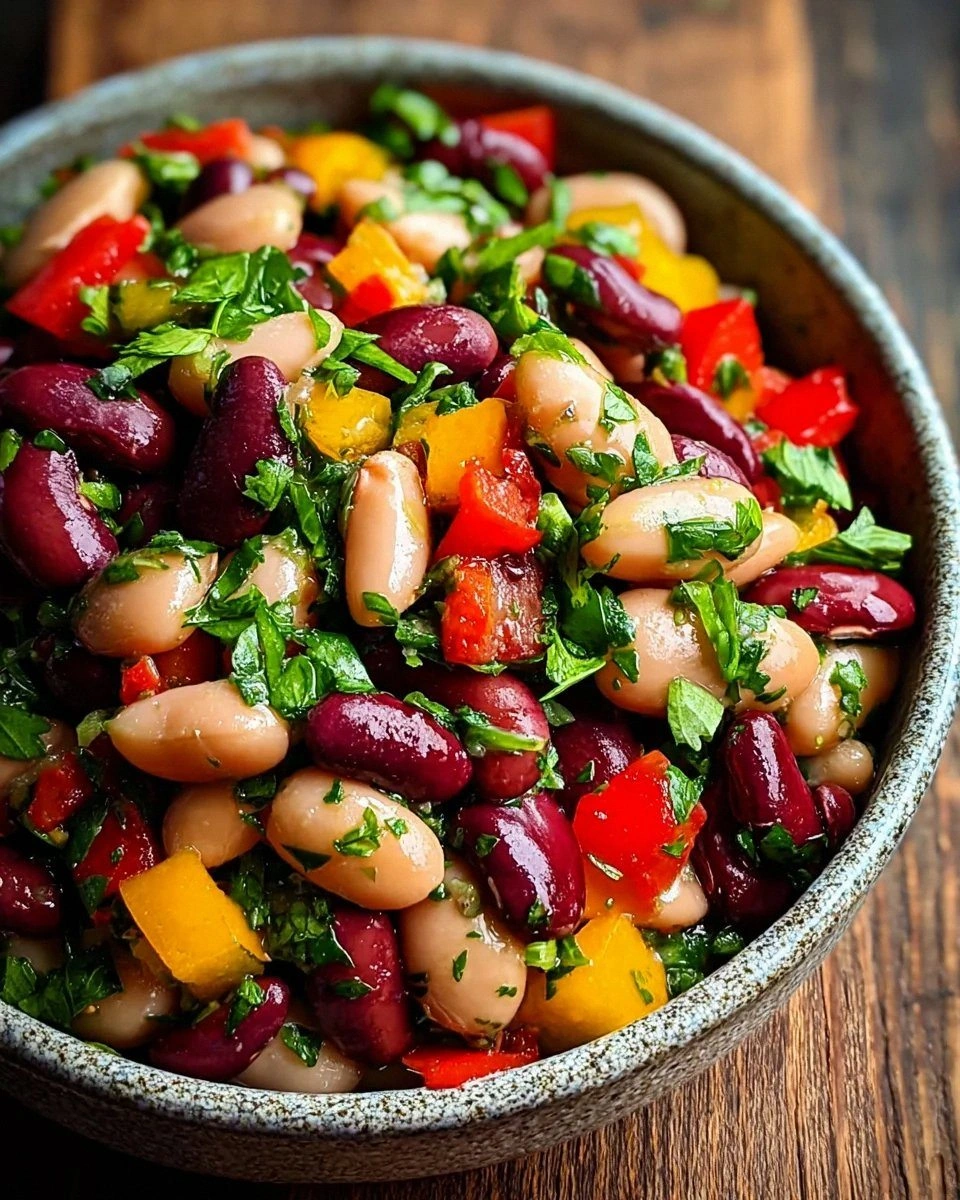
- Texture Symphony: Each bean brings its own mouthfeel – the creamy black beans, the firm kidney beans, the buttery pinto beans – all harmonizing with crisp bell peppers and a slight snap from red onion.
- Simplicity Meets Sophistication: You only need a handful of pantry staples and fresh herbs; no fancy equipment, yet the result feels restaurant‑grade.
- Unique Toasted Bean Step: A quick dry‑sauté before dressing adds a toasty, nutty note that most recipes completely miss.
- Crowd‑Pleaser: Whether you’re feeding vegans, meat‑eaters, or picky kids, the salad’s vibrant colors and bold taste win over every palate.
- Ingredient Quality: Using canned beans that are low‑sodium and rinsed well ensures the flavor isn’t masked by excess salt.
- Make‑Ahead Magic: The flavors deepen after a few hours in the fridge, making it perfect for meal prep or potlucks.
- Season‑Neutral: This salad shines all year long, adapting to whatever fresh produce you have on hand.
Inside the Ingredient List
The Flavor Base
Red wine vinegar: This acidic powerhouse cuts through the richness of the beans and olive oil, giving the salad a lively zing that awakens the palate. If you substitute with apple cider vinegar, you’ll get a fruitier note, but the depth of red wine vinegar is unmatched. Skip it, and you’ll end up with a flat, one‑dimensional dressing.
Lime juice: Freshly squeezed lime adds a citrus sparkle that pairs perfectly with the earthiness of the beans. It also balances the honey’s sweetness, preventing the salad from tasting cloying. A bottled lime concentrate will do in a pinch, but the bright aroma of fresh lime is worth the extra squeeze.
Dijon mustard: A teaspoon of Dijon brings a subtle heat and a silky texture that emulsifies the oil and vinegar into a cohesive dressing. It’s the secret that makes the vinaigrette cling to each bean like a second skin. You can swap with whole‑grain mustard for a bit of crunch, but the smoothness of Dijon is key.
The Texture Crew
Kidney beans: These ruby‑red beauties add a hearty bite and a pop of color that instantly makes the bowl look festive. Their firm texture holds up well against the dressing, ensuring each forkful has a satisfying chew. If you use canned beans, rinse them thoroughly to remove excess salt.
Black beans: Their deep, almost chocolatey flavor provides a grounding element that balances the brighter beans. The creamy interior melts in your mouth, creating a luxurious mouthfeel. Skipping black beans means losing that earthy depth that makes the salad feel complete.
Pinto beans: Slightly sweet and buttery, pinto beans bring warmth and a subtle earthiness that complements the other beans. They also add a soft texture that contrasts nicely with the crisp peppers. If you’re out of pinto beans, cannellini beans make a decent stand‑in.
Great northern beans: Mild and tender, these beans act like a sponge, soaking up the dressing without becoming mushy. Their neutral flavor lets the herbs and spices shine. Overcooking them turns them mush, so a quick rinse and a brief toast is ideal.
Garbanzo beans (chickpeas): The chickpeas give a satisfying bite and a nutty undertone that rounds out the bean medley. They’re also packed with protein, making this salad a complete plant‑based meal. If you prefer a softer texture, give them a quick mash before adding.
The Unexpected Star
Bell peppers: A rainbow trio of red, yellow, and orange peppers adds crunch, sweetness, and a burst of vitamin C. Their natural sugars caramelize slightly when you give them a quick toss in the pan, adding a subtle smoky note. If you’re out of one color, any mix of sweet peppers works, but the visual impact is part of the charm.
Red onion: Diced fine, red onion provides a sharp, peppery bite that cuts through the bean’s earthiness. Soaking the onion in cold water for five minutes mellows the bite without losing its color. Skip the soak, and you might end up with a harsh bite that overpowers the salad.
The Final Flourish
Cilantro and parsley: Fresh herbs are the confetti of this dish, adding bright, herbaceous notes that lift every ingredient. Cilantro gives a citrusy edge, while parsley adds a grassy freshness. If you’re not a cilantro fan, increase the parsley proportion – the salad still shines.
Olive oil: A good extra‑virgin olive oil carries the fat‑soluble flavors of the spices and herbs, ensuring they’re absorbed by the beans. It also gives the dressing a silky mouthfeel. Use a robust oil for extra depth; a light oil can make the dressing feel thin.
Honey (or maple syrup): Just a tablespoon of natural sweetness balances the acidity of the vinegar and lime. It also helps the dressing cling to the beans, creating a glossy finish. For vegans, swap with maple syrup – the flavor profile stays deliciously sweet.
Spices – chili powder, cumin, garlic powder: These three create a warm, smoky backbone that makes the salad feel hearty without being heavy. Chili powder adds a gentle heat, cumin brings an earthy warmth, and garlic powder offers a savory depth. Adjust the amounts to suit your spice tolerance; a pinch more chili and you’ve got a fiesta.
Salt and black pepper: The classic finishers. Salt enhances every flavor, while black pepper adds a subtle bite. Add them to taste after the dressing is mixed; you’ll notice the difference instantly.
Everything's prepped? Good. Let's get into the real action...
The Method — Step by Step
Drain and rinse all five beans under cold water until the water runs clear. This removes the canned brine and any lingering metallic taste. Pat them dry with a clean kitchen towel – remember the kitchen hack: a dry bean surface toasts better.
Heat a large, non‑stick skillet over medium‑high heat. Add the beans in a single layer, letting them sit untouched for about 2 minutes so they develop a light golden crust. Stir occasionally until the beans are toasted all over, about 4‑5 minutes. You’ll hear a faint sizzle that signals the nutty flavor is forming.
While the beans toast, dice the bell peppers into ½‑inch cubes and finely chop the red onion. Toss the peppers and onion into a bowl of ice water for 3 minutes – this keeps them crisp and reduces any raw bite. Drain and pat dry.
In a separate small bowl, whisk together olive oil, red wine vinegar, lime juice, Dijon mustard, honey (or maple syrup), chili powder, cumin, and garlic powder. The mixture should emulsify into a glossy vinaigrette that clings to a spoon. Taste and adjust salt and pepper now – this is the flavor foundation.
Transfer the toasted beans to a massive mixing bowl. Add the dried bell peppers, red onion, and the chopped cilantro‑parsley blend. Pour the vinaigrette over everything and toss gently but thoroughly. The beans should sparkle with the dressing, each color staying distinct.
Cover the bowl with plastic wrap and let the salad rest in the refrigerator for at least 30 minutes. This resting period allows the beans to absorb the dressing, turning the salad from “fresh” to “flavor‑infused.” Watch Out: If you skip the rest, the beans will taste bland and the herbs may wilt.
Before serving, give the salad a final gentle toss. Taste once more and add a splash of lime or a pinch more salt if needed. The final texture should be a harmonious mix of creamy beans, crisp peppers, and herb‑bright bursts.
Serve the Rainbow Bean Salad chilled or at room temperature, alongside grilled chicken, fish, or as a standalone vegan main. I like to garnish with an extra drizzle of olive oil and a few extra cilantro leaves for that Instagram‑ready finish. And now the fun part – dig in and watch everyone go back for seconds.
That's it — you did it. But hold on, I've got a few more tricks that'll take this to another level...
Insider Tricks for Flawless Results
The Toasted Bean Rule Nobody Follows
A quick dry‑sauté of the beans before dressing is the secret weapon that most home cooks skip. The light caramelization adds a nutty depth that transforms the salad from flat to fabulous. I once tried skipping this step; the beans tasted watery and the dressing slid right off. Give the beans just a minute or two in a hot pan – you’ll hear a gentle crackle and see the edges turn golden.
Why Your Nose Knows Best
When the vinaigrette is whisked, take a tiny sniff. If you detect a sharp vinegar bite, add a splash more honey or a pinch of sugar. Your nose is the first line of flavor detection, so trust it more than the recipe’s exact ratios. I’ve saved countless batches by adjusting on the fly based on scent alone.
The 5‑Minute Rest That Changes Everything
Letting the salad sit isn’t just “waiting”; it’s a flavor‑marination. In those 30‑plus minutes, the beans soak up the acidity and the herbs release their essential oils. The result is a cohesive taste where every bite feels balanced. If you’re in a rush, a quick 10‑minute rest still improves the dish, but the full half‑hour is where the magic truly happens.
Herb Timing Trick
Add half the cilantro and parsley when you first toss the salad, then reserve the other half for a final garnish. This two‑step approach keeps the herbs vibrant and prevents them from wilting under the dressing. A friend once folded all the herbs in at once and ended up with a soggy green mush – not pretty.
Seasoning Layering
Season the beans lightly after toasting, then season again after mixing with the dressing. This double‑seasoning ensures the salt penetrates the beans and the dressing alike. It’s a small detail that makes the difference between “good” and “wow‑worthy.”
The “Finish Line” Drizzle
Just before serving, drizzle a teaspoon of high‑quality extra‑virgin olive oil over the top. This final glossy coat adds richness and makes the colors pop under the light. It’s the finishing touch that turns a simple bowl into a plated masterpiece.
Creative Twists and Variations
This recipe is a playground. Here are some of my favorite ways to switch things up:
Mediterranean Mezze Mix
Swap the lime juice for lemon juice, add chopped Kalamata olives, and sprinkle crumbled feta on top. The result is a tangy, salty twist that pairs beautifully with pita chips. Perfect for a brunch spread.
Spicy Chipotle Blast
Add a teaspoon of chipotle in adobo sauce to the dressing and increase the chili powder by half. The smoky heat elevates the beans, making the salad a bold side for grilled tacos. Serve with avocado slices to mellow the fire.
Asian‑Inspired Sesame Splash
Replace the olive oil with toasted sesame oil, add a splash of soy sauce, and toss in shredded carrots and sliced scallions. Garnish with toasted sesame seeds. This version feels light, nutty, and pairs well with grilled teriyaki chicken.
Harvest Autumn Blend
In the fall, incorporate roasted butternut squash cubes and a pinch of sage. Swap the lime for a dash of apple cider vinegar. The sweet‑savory combo mirrors the season’s comfort foods.
Protein‑Power Boost
Add cooked quinoa or farro to the bean mix for extra bulk and a nutty texture. This makes the salad a complete meal for athletes or anyone needing a hearty post‑workout bite.
Storing and Bringing It Back to Life
Fridge Storage
Transfer the salad to an airtight container and store in the refrigerator for up to 5 days. The flavors will deepen, and the beans become even more tender. Before serving, give it a quick stir and a splash of lime to revive the brightness.
Freezer Friendly
While raw beans freeze well, the fresh herbs and crisp peppers lose texture. For freezer‑ready portions, keep the dressing separate and store the bean‑pepper mix in a zip‑top bag for up to 3 months. Thaw in the fridge, then combine with the dressing and fresh herbs.
Best Reheating Method
If you prefer a warm version, gently heat the salad in a skillet over low heat for 3‑4 minutes, adding a teaspoon of water or broth to create steam. This revives the beans without drying them out and keeps the veggies crisp.