What Makes This Version Stand Out
- Flavor: The ketchup glaze gives a sweet, tangy finish that balances the richness of the beef, creating a depth of flavor that’s impossible to replicate with plain breadcrumbs.
- Texture: The sheet‑pan method ensures a crisp exterior while keeping the interior moist, a contrast that satisfies every bite.
- Simplicity: No need for multiple pans or complicated sauces; everything cooks in one place, making cleanup a breeze.
- Uniqueness: The combination of meatloaf and roasted potatoes on a single sheet is a creative twist that turns a classic into a crowd‑pleaser.
- Audience: Whether you’re feeding a family or a group of friends, the dish scales easily and delivers consistent results.
- Quality: Using fresh ground beef and a handful of herbs keeps the recipe grounded in real, wholesome ingredients.
- Method: Baking everything together creates a unified flavor profile that’s richer than separate cooking.
- Make‑ahead: The loaf can be assembled ahead of time and baked later, saving you precious minutes on a busy night.
Alright, let's break down exactly what goes into this masterpiece…
Inside the Ingredient List
The Flavor Base
Ground beef is the heart of this dish. A pound of lean beef provides the savory foundation that carries the ketchup glaze. If you want a richer flavor, switch to a higher fat percentage, but be prepared for a slightly greasier loaf. The beef’s protein content keeps the loaf cohesive, preventing it from falling apart when you slice it. If you skip the beef entirely, the dish loses its core identity and becomes a potato casserole.
The Texture Crew
Breadcrumbs act as the binder that holds the meat together. They absorb the moisture from the eggs and ketchup, creating a tender crumb that’s not too dense. If you’re gluten‑free, swap them for almond flour or crushed crackers. Eggs provide structure and help the loaf rise slightly, giving it a light, airy feel. A single large egg is enough for this quantity of meat; adding more can make the loaf too dense. The olive oil adds a subtle richness and helps the crust develop a golden hue.
The Unexpected Star
Potatoes are the unsung hero that turns this dish into a one‑pan wonder. The medium potatoes are sliced thinly so they roast evenly and absorb the juices from the meat. Their starch content creates a slightly crispy exterior while remaining fluffy inside. If you prefer a different texture, try sweet potatoes or parsnips for a sweeter, sweeter finish. Skipping the potatoes would turn this into a standard meatloaf, missing the comforting side dish that makes it a complete meal.
The Final Flourish
Ketchup is the secret sauce that gives this loaf its signature caramelized crust. The sugars in the ketchup caramelize during baking, creating a glossy, flavorful glaze that locks in moisture. Parsley adds a fresh herbal note that cuts through the richness, offering a bright counterpoint. Salt and pepper are essential for seasoning; without them, the dish would taste flat and uninspired. A pinch of paprika or smoked paprika can add depth and a subtle smoky undertone.
Everything's prepped? Good. Let's get into the real action…
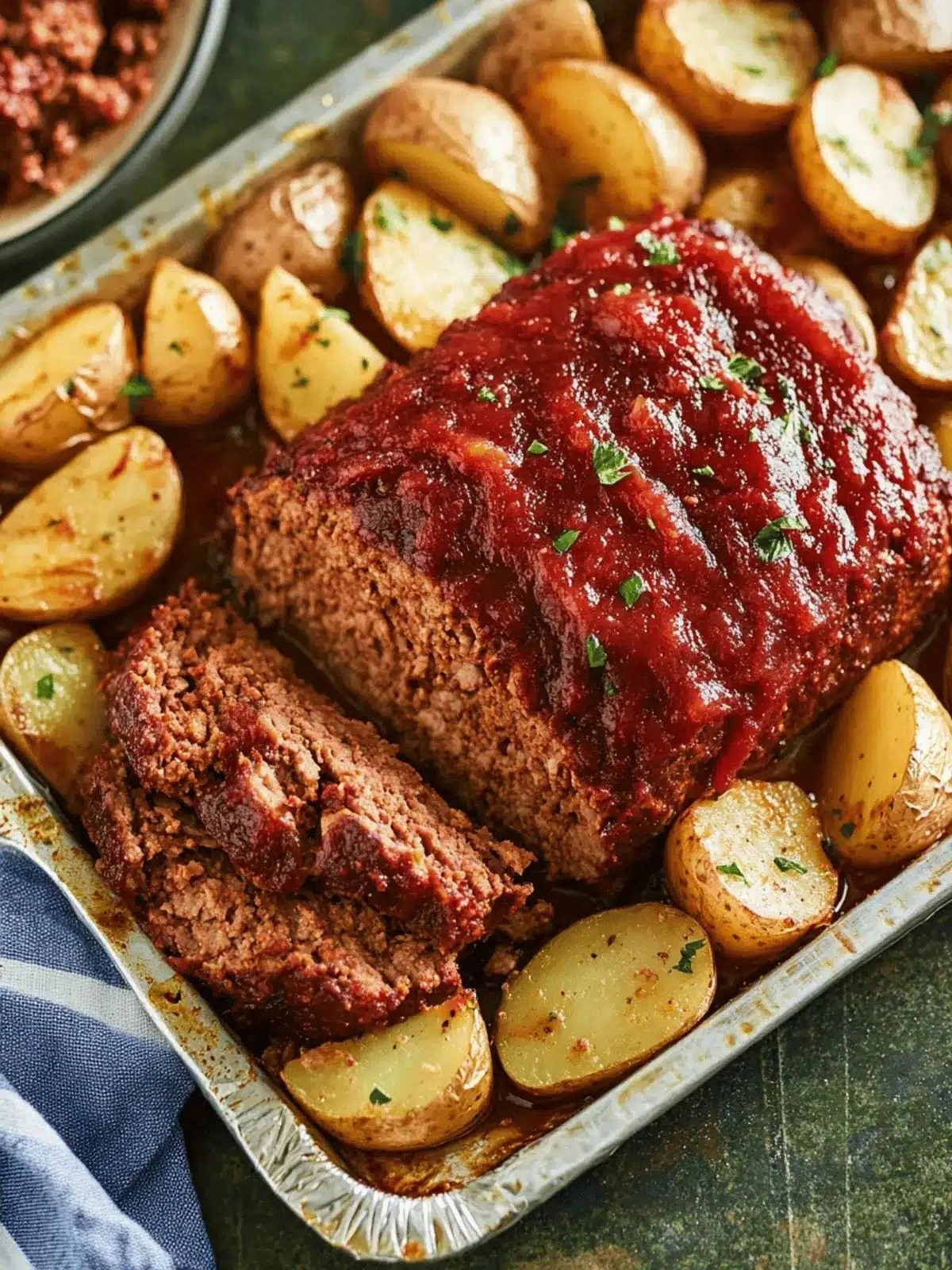
The Method — Step by Step
- Preheat the oven. Set your oven to 375°F (190°C). This moderate temperature allows the meatloaf to cook evenly without burning the ketchup glaze. While the oven heats, grab a sheet pan and line it with parchment paper to prevent sticking. The parchment also makes cleanup a snap. If you’re using a convection oven, reduce the temperature by 25°F for a more even roast.
- Prepare the potatoes. Slice the three medium potatoes into thin rounds, about 1/8 inch thick. The thinness ensures they roast quickly and absorb the meat juices. Toss the slices in a bowl with a tablespoon of olive oil, a pinch of salt, and a pinch of pepper. Spread them out in a single layer on the sheet pan, leaving a little space between each slice so they crisp up nicely. If you like a bit of crunch, sprinkle a dash of grated Parmesan over the top.
- Mix the meat. In a large bowl, combine the ground beef, breadcrumbs, egg, ketchup, and chopped parsley. Season generously with salt and pepper. Use your hands to mix until everything is evenly distributed; the dough should be moist but not wet. The ketchup not only adds flavor but also helps bind the mixture together. If you’re feeling adventurous, add a splash of Worcestershire sauce for an extra umami kick.
- Form the loaf. Once the potatoes are spread on the pan, take the meat mixture and shape it around the potatoes. Think of it as a layer cake: the potatoes are the middle layer, and the meat wraps around them like a protective shell. Press the meat gently into the pan, ensuring it’s snug against the potatoes but not so tight that it squeezes out the juices. A well‑formed loaf will hold its shape when sliced.
- Seal the edges. To keep the meat from drying out, use a little more ketchup or a drizzle of olive oil along the edges of the loaf. This creates a seal that traps moisture inside, ensuring the interior stays juicy. If you prefer a thicker crust, apply an extra layer of ketchup on top of the loaf before baking.
- First bake. Place the sheet pan in the preheated oven and bake for 25 minutes. During this time, the potatoes will start to soften, and the meat will begin to set. The ketchup glaze should start to bubble and caramelize, turning a deep amber color. Watch the edges of the loaf; they should begin to pull away from the pan, signaling that the crust is forming.
- Check for doneness. After 25 minutes, use a meat thermometer inserted into the center of the loaf. It should read 160°F (71°C) for safe consumption. If it’s lower, return the pan to the oven for another 5–10 minutes. The potatoes should be tender when pierced with a fork.
- Finish the crust. Once the loaf reaches the right temperature, remove it from the oven. Let it rest for 5 minutes; this allows the juices to redistribute, preventing a dry bite. During this rest, the ketchup glaze will thicken slightly, giving it that glossy, indulgent finish. Slice it with a sharp knife, and watch the crust crackle as you cut through it.
- Serve. Plate the meatloaf slices with the roasted potatoes on the side. Drizzle any leftover glaze over the top for an extra burst of flavor. Pair with a simple green salad or steamed broccoli to balance the richness. The aroma of the freshly baked loaf will fill your home, making everyone feel like they’re dining at a gourmet restaurant.
That's it — you did it. But hold on, I've got a few more tricks that'll take this to another level…
Insider Tricks for Flawless Results
The Temperature Rule Nobody Follows
Many home cooks bake at 400°F, assuming higher heat cooks faster. In reality, a lower temperature of 375°F allows the meat to cook through gently, preventing the ketchup from burning and the loaf from drying out. The gentle heat also ensures the potatoes roast evenly without becoming mushy. I’ve tried 425°F a few times, and the crust was too dark while the interior remained undercooked. Stick with 375°F for consistent, juicy results.
Why Your Nose Knows Best
Trust your nose when the meatloaf starts to emit that caramelized, savory aroma. That scent signals the sugars in the ketchup are caramelizing, which means you’re close to the perfect crust. If the smell is weak, the oven might be too cool or the loaf too thick. Open a window or turn on the vent to let that aroma fill the kitchen; it’s part of the experience.
The 5-Minute Rest That Changes Everything
Resting the loaf for exactly five minutes after removing it from the oven is a game changer. During this pause, the juices redistribute throughout the meat, preventing them from spilling out when you slice. The crust also sets, making it easier to cut clean slices. I’ve seen people cut immediately, only to find the loaf sticking to the knife and losing its shape. A quick five‑minute rest is a small investment for a flawless presentation.
Don’t Skip the Parchment
Parchment paper is not just a convenience; it keeps the potatoes from sticking and allows the glaze to caramelize evenly. If you skip it, the potatoes might burn or stick, ruining the texture. I once used a silicone mat instead, and while it worked, the potatoes didn’t crisp up as well. Parchment is the gold standard for sheet‑pan roasting.
Add a Splash of Liquid
If your loaf looks too dry before you finish baking, lightly spray the top with water or a broth. This creates steam, which helps keep the meat moist and prevents the ketchup glaze from becoming overly hard. The trick is to use just enough to create vapor, not a wet surface. This small tweak can be the difference between a dry loaf and a juicy masterpiece.
Creative Twists and Variations
This recipe is a playground. Here are some of my favorite ways to switch things up:
Cheesy Surprise
Add a handful of shredded mozzarella or cheddar between the meat and potatoes for a gooey, melty center. The cheese adds a creamy texture that complements the savory loaf. It’s perfect for those who love a little extra indulgence.
Herb‑Infused Delight
Swap the parsley for a mix of fresh thyme, rosemary, and oregano. The herbs bring a fragrant, earthy aroma that pairs beautifully with the ketchup glaze. This variation is ideal for spring and summer when fresh herbs are at their peak.
Spicy Kick
Add a teaspoon of crushed red pepper flakes or a dash of hot sauce to the meat mixture. The heat cuts through the richness and adds a playful bite. It’s a great way to bring some excitement to a family dinner.
Gluten‑Free Option
Use gluten‑free breadcrumbs or crushed rice crackers instead of regular breadcrumbs. The loaf will still hold together, and the texture will be slightly different but still delicious. This variation is perfect for those with dietary restrictions.
Sweet Potato Twist
Swap the regular potatoes for sweet potatoes to add natural sweetness and a vibrant color. The sweet potato slices roast beautifully and complement the ketchup glaze. This version is a hit during fall and winter holidays.
Storing and Bringing It Back to Life
Fridge Storage
Cool the loaf to room temperature, then wrap it tightly in plastic wrap or foil. Store in the refrigerator for up to 3 days. When ready to serve, reheat in a preheated oven at 350°F (175°C) for 15 minutes, or until warmed through. The crust may soften slightly, but the interior will remain moist.
Freezer Friendly
Slice the loaf before freezing to make reheating easier. Place the slices on a parchment‑lined tray and freeze until solid. Transfer to a freezer bag, and store for up to 3 months. To reheat, microwave on medium for 1–2 minutes or bake in a preheated oven at 350°F (175°C) for 10 minutes.
Best Reheating Method
Add a splash of water or broth to the bottom of the pan before reheating. This creates steam, ensuring the loaf stays juicy and the glaze remains glossy. Cover the pan with foil during the first 5 minutes, then remove the foil to allow the crust to crisp up again.